January 15, 2011

Another great email from my grandpa.

January 3, 2011

Post #28 - Important PIC decision


Today I was scheduled for a solo flight in the Piper Arrow. I really enjoy solo flights and was excited for this one to help master some of the maneuvers I am working on. The weather this morning was beautiful; zero wind, 9 miles of visibility and clear skies. A great day for a solo flight. I was scheduled at 11am but quickly ran out of time, and the line at the DMV always takes longer than expected. So I rescheduled for 1:30 later today. I showed up at my scheduled time and waited for the only Arrow left to get back from its flight. The other 2 Arrows were down for maintenance. While I was waiting in dispatch, the dispatcher told me that the runway was icy and to be careful. I took his advice seriously and thought about what I would need to do, some of my previous flights had icy runways as well so I wasn't too nervous.

The pilot then got back from his flight. I went outside to talk to him. He asked me if I was taking it up and I replied yes. He said that the landing light was not working, the flaps were sticking a little, and the engine had a "little burp". The landing light is not necessary for day operations and the flaps sticking were not a major issue because it could be landed without flaps if they didn't work, but the engine burp worried me. As he went on he said that they thought it happened because of the maneuver they performed, but then it happened again. He added that it gave them a scare. The plane was "airworthy" for a day flight, as defined by the regulations, but the regulations also say that the PIC (pilot in command), has the "final authority and responsibility for the operation and safety of the flight". This means that I would have the right to decide if I felt the plane was airworthy. It was an important decision. I need to get as much flying done as possible, in a short time, in order to graduate on schedule. But I didn't feel safe flying in that plane unless our mechanic would take it apart and look at it. It's simple, yet important decisions like this that the PIC is responsible for. I feel that I made the right decision. I don't want to take any risks, especially with a baby just a few weeks away.

On a side note, I wonder what would have happened if I took the plane up at 11am, when I was originally scheduled before his flight.

December 17, 2010

Post #27 - Where to start?

It's been a little while since my last post and so much has happened! Where should I start? Lets see... Finals are over, took my commercial FAA pilot written test, have had several flights, including first solo in a complex aircraft, and a crash not far from here.

Lets start with the crash and go from there. In writing this I mean no disrespect to the family and friends of the pilot. My condolences go out to them.

On December 3rd, a private pilot with an instrument rating was attempting to land at the Ogden airport on an instrument approach. He crashed short of the runway knocking out power to hundreds of homes and damaging 2 homes. Read the news report HERE.
Also, a preliminary NTSB report can be read HERE.

Looking at the report and and reviewing what happened we can make a few guesses and conclusions. The two arrows shown in the first picture show Ogden Airport and the approximate spot and direction of the crash.

The next diagram is the approach that was used by the pilot.  The report stated that visibility was 1/2 mile and the ceiling was 100ft. It also stated that it was worse on the ground. The ATIS information had a ceiling at 400 ft. Near the bottom of this approach is a minimums section. It states for a straight in approach on runway 3 that you need AT LEAST 3/4 mile visibility and a 200 ft ceiling, the conditions this day ,at the time of his approach,were close to or even below minimums.

Last I have heard the pilot was in the hospital with burns over most of his body, but is expected to recover. ___________________________________________

To change the subject now, Finals are completed and this semester is over! It feels great to be done with this one and another step closer to my degree and career! I also took my FAA Commercial Pilot written test and I PASSED! It was 100 questions long and took me a little over 1 hr. If you would like to take a 10 question practice test on the commercial pilot questions, go HERE.

I have also had several flights in the Arrow. I have been practicing the same commercial maneuvers and feel more proficient in them. I am feeling much more comfortable in the arrow and am able to nail a spot on the runway within about 20 feet. I am really starting to enjoy flying the arrow, it feels more like flying an airplane than the Diamond DA40 did, don't get me wrong, I enjoy both for different reasons.

One of my flights I completed recently was my first solo in the Arrow. When transitioning to complex aircraft a major problem that can arise is not putting the landing gear down when landing. I was a little nervous that something like this could happen. But I stuck to my checklists and the entire flight went great. A few days before this flight I read an article in AOPAs Flight Training Magazine. The article told a story of a pilot who had gone up with an experienced instructor to freshen up on his skills. The instructor had him fly low. 700 feet above a river he flew overhead and followed the river in its twists and turns. The student said this experience felt more like flying than the usual straight and level flight and the doldrums of checking instruments. Motivated by this article, I decided to take advantage of my time alone in the aircraft and do something that I wanted to do. So after practicing a few maneuvers, I took the plane down to 700 feet AGL and followed a little river along all its twists and turns, some of which were very tight. I enjoyed the feeling of handling the aircraft and making my inputs to get the desired outcome. The feeling of changing G forces kept me aware of how tight the plane was turning. It was a great feeling completing that and being able to maintain my altitude.

Picture below shows river area I followed.

December 6, 2010

Amazing Airplane Maintenance

November 11, 2010

Slow times...

Weather and time haven't been cooperating, so I haven't had a lot of flights lately. However, that doesn't mean I can't post another video. Enjoy!

Don't try this at home!

November 2, 2010

Post #26 - Intro to Commercial Maneuvers

Today was the day that I was introduced to several of the new commercial maneuvers. Mainly Chandelles, Lazy Eights, Eights on Pylons, and Steep Spirals. I also practiced some more soft field landings and short field. My soft fields are looking a lot better, and today was the first day for short field in the Arrow, I still need some practice on that. The commercial maneuvers were harder than I expected them to be, I guess that is why they save them for commercial training. Total flight time today was 1.9 hrs and I finished just before dark.

Here is a video on steep spirals.

November 1, 2010

Post #25 - Complex Endorsement

Today/tonight was my fifth flight in the Arrow. Justin and I departed Logan at about 6:30pm and it quickly became dark. Most of the lesson today was night time, but it was fun! It had been a while since I landed in the dark so I got caught up on my night recency. Today I practiced some more slow flight, stalls (including cross-controlled stalls), soft field landings, and emergency procedures. I totaled 5 takeoffs and landings and 1.2 hrs of total flight time today. And after the flight I received my Complex Aircraft endorsement! Woo hoo! One more notch in my belt. Tonight was a great flight and I am starting to enjoy flying the Arrow. Before I thought it was a brick, and a beast to handle, but now I am learning how it can be used for precise inputs and performance.

In commercial ground school we are learning about some of the commercial maneuvers we will be tested on for the Commercial Pilot Check Ride. One maneuver, called the Chandelle, is a maximum performance climbing turn taught to improve planning and handling of the aircraft. In the first 90 degrees of the turn, you must maintain 30 degrees of bank angle while slowly increasing your pitch attitude to climb, at 90 degrees you should be at your maximum pitch and begin to slowly decrease your bank angle while maintaining a constant pitch attitude. Upon your rollout at 180 degrees your airspeed should have slowed to just above stall speed, this will be about 55 mph in the Arrow. If planned improperly, the aircraft will stall or will be too fast. This is a moderate difficulty maneuver and I look forward to start learning it. In the next lesson, I will discuss the steep spiral.

October 9, 2010

LUAW & Insurance

For those aviators who don't already know, the phrase "Position and Hold" will no longer be used in any tower controlled airport. This phraseology will be changed to "Line Up and Wait". This is being done in accordance with ICAO standards. Additional information can be found at FAA.gov and a video about it from the FAA Safety Team can be seen HERE.

Also, I learned of a great insurance policy that AOPA offers to provide you with legal services in the event that the FAA suspends or revokes you license. It is only $33/yr and is well worth it, or at least looking into. More information on it can be found HERE.

Water Assisted Landing

September 26, 2010

The Piper Arrow


  • Engine - 200 HP Lycoming
  • Max Takeoff Weight - 2750 lbs
  • Fuel Capacity - 50 gals
  • Max speed - 183 kts
  • Cruise speed - 135 kts
  • Max altitude - 16,200 ft
  • Landing distance - Approx - 650ft
  • Takeoff distance - Approx - 1200ft
  • 4 - Passenger

September 25, 2010

Post #24 - More Flights in the Arrow

This Monday and Tuesday I flew again in the Arrow. These flights in the Arrow are so I can get my complex endorsement. You need this type of endorsement in your logbook so you can be a PIC of an aircraft that has a retractable landing, variable pitch propellor, and adjustable flaps. Just about any type of aircraft that is used in commercial flying is a complex rated aircraft. The flights were a little over an hour each and the weather was beautiful this time. I practiced slow flight, stalls, take offs/landing (both normal and soft field), emergency procedures (including engine failure, fires, stuck landing gear,etc), ascents/descents, and just getting used to how the new airplane feels. It is a heavy beast and my left shoulder is still sore from having to yank back on the control for landing flares. Guess I need to start lifting weights and muscle up. Overall, they were two good flights and I am looking forward to next week when I will fly again.

I am also enrolled in commercial ground school. As the semester progresses I will write about topics that I feel are important to commercial pilots or those who have an interest in becoming a commercial pilot. I will review some of the FAA commercial pilot test questions and have some small quizes. Hopefully this will help you to get an idea of what is expected of a commercial pilot.
...........................................................................
On a different note, I am adding a donation section, which can be found below or on the side column. Any donation will go to my flight account to help pay for the expense of my training. This will allow for me to continue flying, write about my experiences on this blog, and to help further interests in aviation. Please help contribute, even if it is a little, to help make this all worth while. (I am not trying to make money, and this will be the only post about it, all posts after this will continue to be 100% aviation. Review my previous posts too if you haven't already). The shirt is an original design with detail from an aviation sectional chart, seen below.

Any donation $15 or more will receive a FREE Flyin Aggie T-shirt!


September 20, 2010

Post #23 - First flight in the Arrow! aka - Windy day

Well, I finally got some more money to go flying again. This was my first flight in the Piper Arrow. I will be gaining experience in it to receive my complex endorsement. I went up in the Arrow on Monday with Justin. It was a beautiful day outside and the weather forecast was looking good, except for the small storm that was supposed to come in around 5pm. I was meeting Justin at 1:30pm so it shouldn't of been a factor. I met with him and we went over the new preflight information. We hopped into the plane and began the engine start-up checklist. It is interesting going from a plane that was built a few years ago into one that is older than I am. Most of the Arrows USU has were built in the early 70's. It was hard to find the correct switches because the lettering is worn off on most of them. One of the features I liked was the flap lever. It looks just like an emergency brake lever in a car, and is positioned in the same spot too. It's a little more fun to be able to bring the flaps in immediately, than it is to push a button and wait 3 seconds for them to engage. After fumbling through the new checklist and finding my way around the vintage instruments, we taxied over to the self-serve gas pump.

Justin helped one of his other students with gas. He was a private pilot student who was going on a solo cross-country flight about the same time we were leaving. The other student filled up on gas and went to the run up area. As we were filling up on gas, I looked to the West and saw some dark clouds peaking over the mountain tops. There was the storm starting to come in. It was coming way early though. It shouldn't have come for about another 2 hours or so. We discussed it and decided that we would still go and land before it got too bad. We would listen to the weather on Logan's ASOS (Automated Surface Observing System) frequency during our flight. While we were performing the run-up the dark clouds seemed to be getting closer. Justin was worried about his solo student and got a hold of him on the radio. He mentioned the clouds to the West and they discussed it briefly. The student, already airborne, decided to cancel his long cross-country flight. I don't blame him because he would have had a long flight in some unfavorable weather.

Justin and I talked about our options and decided that our short flight would be alright to continue, and if the weather got too bad over Logan we could land in Preston, ID about 20 miles north of Logan. We departed LGU to the North and entered a practice area for some maneuvering. I practiced normal turns, ascents, descent, and slow flight. It was a totally different feel than the diamonds. It's glide ratio is more like a brick than a plane, but it can turn really well.

After about 40 minutes into our flight we noticed that the weather system was predominately over Logan and we listened to the weather frequency. The winds were recorded gusting to 45 knots. That's over 50 mph! Needless to say we didn't want to land in Logan, so we diverted to Preston and landed on their short little runway. It was still a little windy but not as bad. Probably gusting around 20-30 knots. I didn't feel comfortable landing the Arrow in Preston, the runway is narrow and short, so I had Justin land it there. We went into the scrappy pilot lounge and check the weather radar on Justin's phone. Man, I wish I had a fancy phone! They really do come in handy sometimes (not just for showing off what your phone can do). The TAF reported that weather would lighten up in the next hour. After waiting out the storm for 45 minutes, we left the little shack and departed Preston Airport. Winds were reporting 5 knots now in Logan, so we went straight home. I performed my first landing in the Piper Arrow and as Lindsay said in a text message, I got my feet on the ground. So I sent her a text back to let her know I was OK.

And so continues my adventure into Commercial Piloting!

July 25, 2010

A little bit of fun!

This next Saturday, the 31, I am taking my boss and his wife and also another friend from work up in the DA40. All 3 are helping to pay for it, so I am going to take them around Logan for a little sight seeing. I might also do some steep turns and stalls for a little extra fun!

Post #22 - CAP training mission

This Friday I was scheduled for scanner training for the the Civil Air Patrol. I went up on 3 flights with two other pilots and practiced scanning techniques while the pilots practiced homing in on an emergency beacon signal. There was a ground team of cadets with the practice beacon and our objective was to locate and take aerial photographs of them. I was able to spot them both times (it wasn't easy).

I was able to spot them in the shadow just before they were completely hidden behind the tree. (if you zoom in on the pic, you can see their orange vests in the middle.)

The second time was a little easier to find them.

Reservoir from 1000 ft above
The two pilots, Denny and LR.
On our way back to the Ogden airport we spotted a little fire. Not sure how it started, but decided to take a quick pic of it.
A corn maze for this Halloween. It says "Field of Fear"

Another corn maze, not sure what it is though. Hmm??? Any guesses?


Overall, I was gone for 10 hours, 4 of which were spent flying. Got some experience scanning, which I am now a qualified scanner for CAP, and had a fun day spending time with some seasoned pilots.

These pilots where in an actual mission last week. It was a big deal for us because our squadron has just recently been building up our emergency aircrew. It was our squadrons first air mission in 20 years I believe. There was a glider pilot who was overdue and rescue services where sent out to find him. Unfortunately he was later found dead. His glider crashed onto a mountain side. It was a sad ending and our hearts go out to his family and friends.

July 13, 2010

Little bit of humor

Well summer is here and I don't have the money to fly, so thought I would put up a little bit of aviation humor. Here you go!

ATC Mother-in-Law

June 28, 2010

Post # 21 - Instrument Check Ride Flight

On Friday, June 25th, I was able to meet with the FAA Check Ride Examiner to do the flight portion on my Instrument Check Ride. This test would determine if I would get my instrument rating. I did the necessary flight planning and flew solo down to Ogden to meet him there. I got there about 20 minutes early and went over some approaches to make sure I understood them completely before going up. However, that morning when I called the flight briefer to get weather and NOTAMS (Notices to Airmen) I found out that Ogden was doing some repairs and their ILS would be out of service. This was going to change things a little because I would need to fly an ILS approach for the test. When Clair got there I told him about this so we decided that we would do the ILS approach at Hill Airforce Base. We started our flight with vectors for the GPS approach and then did a hold 10 miles north of the Ogden VOR. About 5 seconds after Clair gave me directions for the hold ATC asked me over the radio what and where we wanted to go, after telling them I needed to climb to a different altitude and do this while planning my entry into the hold. After that was situated with ATC I had 0.2 miles to find out what the holding side was and my decision for the holding entry. This left me about 10 seconds to make the decision, and from what I have heard from other pilots that have failed the checkride, that they failed it because of a wrong entry or wrong turn on a hold. This made me a little nervous for a moment because I had a few seconds to make sure I did it right the first time. Usually for the holds I like to draw it on scrap paper and double check it with how it correlates with my instruments, but this time I had to do it purely in my head. Well, needless to say, I performed the hold correctly, because I PASSED MY CHECKRIDE! I am now instrument rated and am going to start working on my commercial license.

I am excited to start flying the Piper Arrow. It will get me my complex aircraft rating and I will then start flying the DA-42 a multi-engine aircraft. Below are pictures of each.


Piper Arrow


Diamondstar DA-42, left and below


June 20, 2010

Post #20 - Instrument Rating Checkride

Today was a fairly stressful day. I woke up early to finish the last minute touches to my flight plan. I needed to make an IFR flight plan to Missoula, MO and show the check airman that I was capable of doing so. So anyway, I woke up early to get weather information and make all the corrections on my plan as need for wind, etc. Then I started some last minute studying for things such as holding speed/altitude maximums, types/distance/heights of navaids, maximum safe distance for circling minimums, etc. All things that require tedious memorization of altitudes and distances for the ground interview. Well, the time came for me to leave and Justin, my flight instructor, called me and said that the check airman was going to be a little late, maybe 45 minutes. Well it turned out to be about 2 hours. Then I needed to fill out some information on the FAA website before we could begin. I had to work at 6pm that day and it was getting later and later. We decided to only do the ground and to finish the flight another day. The ground was intense. We talked about types of clouds, precipitation, and weather associated with different fronts. We also talked about different types of scenarios that he had been in. This ground was way more intense than the stage checks I had previously been in. It was a big change from having a CFI saying I really know my stuff, to being quizzed by a check airman with 40+ years of experience. Although I didn't feel as good about this ground, I did pass. He said I knew everything that he expected me to, so that made me feel better. I am going to contact him later this week and we will finish the flying portion of the check ride.

On a different subject - HAPPY FATHER'S DAY to all you fathers and fathers to be. I called my dad today and wished him a special Father's Day. Was good talking to him and my mom. I sure do love those two. Here is video from Youtube for the fathers out there.

Post # 19 - Stage III Instrument Check

Stage III is passed. The stages keep getting increasingly difficult. It was on Monday the 14th and started off with 2 hours of ground testing and then the flight. The ground went great, he said I really knew my stuff and was impressed. The flight consisted of holds, ILS approaches, Navaid tracking, and a GPS approach. Pretty basic stuff for instrument flying. The flight went good too. It ended with a hold on the GPS 35 approach on the North side of the OBNUE Fix. That is pretty basic too (as long as you now what direction North is). I passed stage III and now it is on to the Check Ride! A $350 test, so better not fail! Will be expensive to retake it. It's scheduled for Friday the 18th.

June 15, 2010

Post # 18 - CAP Activity & Flight

Last Wednesday, the 9th, the Civil Air Patrol helped the Wyoming National Guard with an emergency exercise. The scenario was that Denver, Colorado had a devastating earthquake and evacuees were flown into Salt Lake. We posed as evacuees who were distraught and had to go through the process of registering with Red Cross, etc. It was a fun experience and later we got a tour of a C-130. Here are some pics.


It was fun seeing some of the "injured people".
The unlucky few casualties that didn't make it.


Also, yesterday the 14th, I flew to Tooele Valley, just south of the Great Salt Lake, then flew into Ogden for a few more practice approaches. My friend Jake from work came with me and he was really excited. I guess that day at work when he went in it was the first thing he talked about. Now my manager is hitting me up for some flights. Guess I am going to have to start charging. Tomorrow is my stage III check for instrument flying, then after that is the check ride for my Instrument Rating! Wish me luck!

June 7, 2010

Post #17 - 250 mile IFR Cross country & some extra fun

Today I had an IFR cross country flight to Rock Springs, WY and also to Fort Bridger, WY. The total flight was 3.5 hrs. I was in contact with Salt Lake Center for the duration and flew 1 ILS, 1 GPS, and 1 VOR approach. I got a little bit of actual instrument time, here is a short clip of me flying into Instrument Meteorological Conditions (IMC).


The winds were stronger than forcasted when landing at the two airports in Wyoming. There were sustained winds of 30 knots (about 34 mph) with some gusts. Landing in strong winds, especially crosswinds can be difficult. However, I successfully performed a touch-n-go in Rock Springs and Fort Bridger. Needless to say, the ride was fairly bumpy today.

After my cross-country flight, Justin, my flight instructor, spoke to his other student. The other student was going to fly that day but decided not to. So Justin invited me to go up in his airplane. Justin has a Cessna 172 Skyhawk. It has a kit on the wings that allows for slower flight during landing and take off. We wondered how many feet it would take to take off and land today, during the strong winds. Here is the result.


I went on google maps and approximated that it landed and came to a stop in about 200 feet. Normally it could take about 600-1000 feet.

A fun day of flying!

Post #16 - Airshow and CAP security

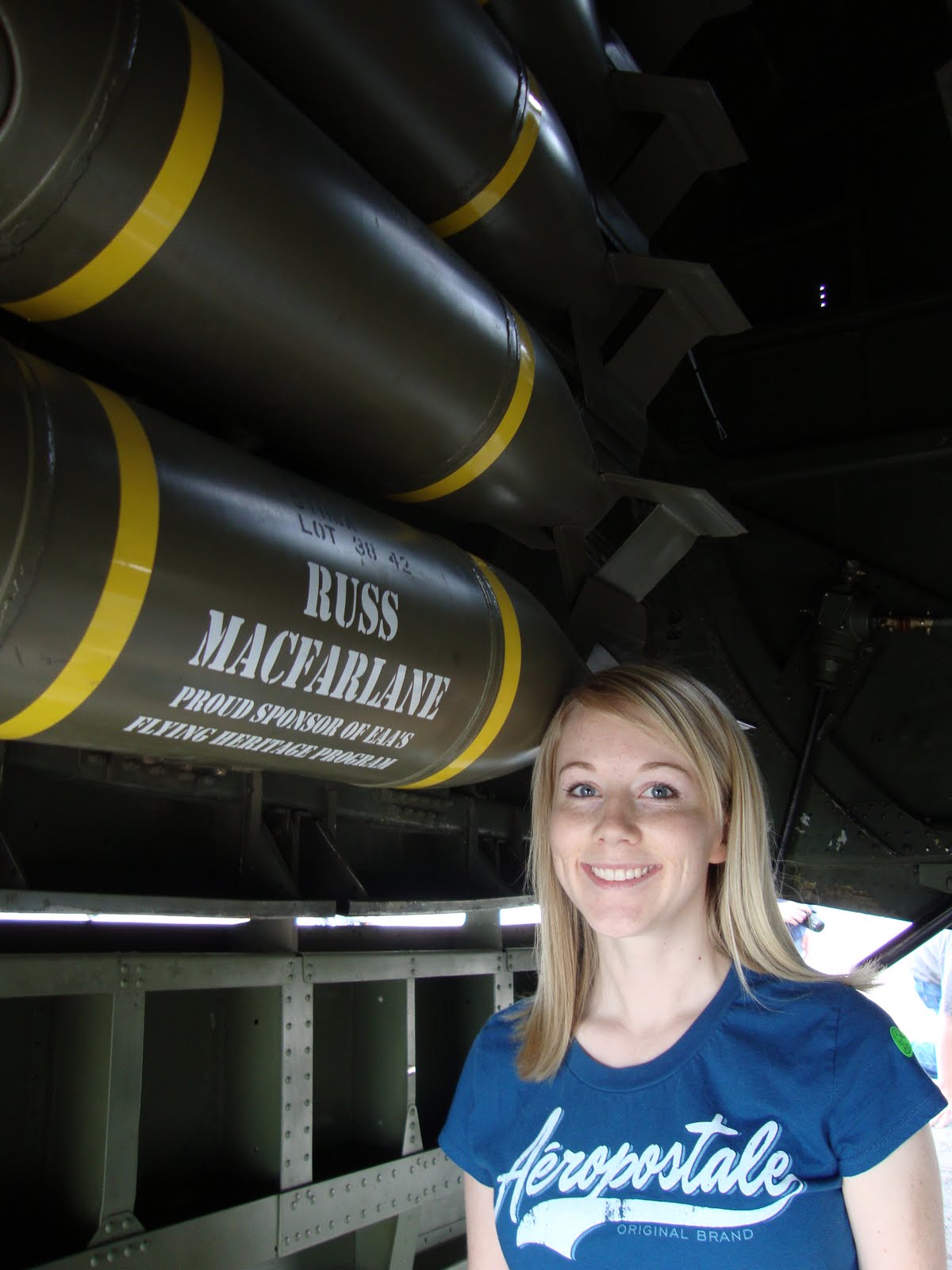
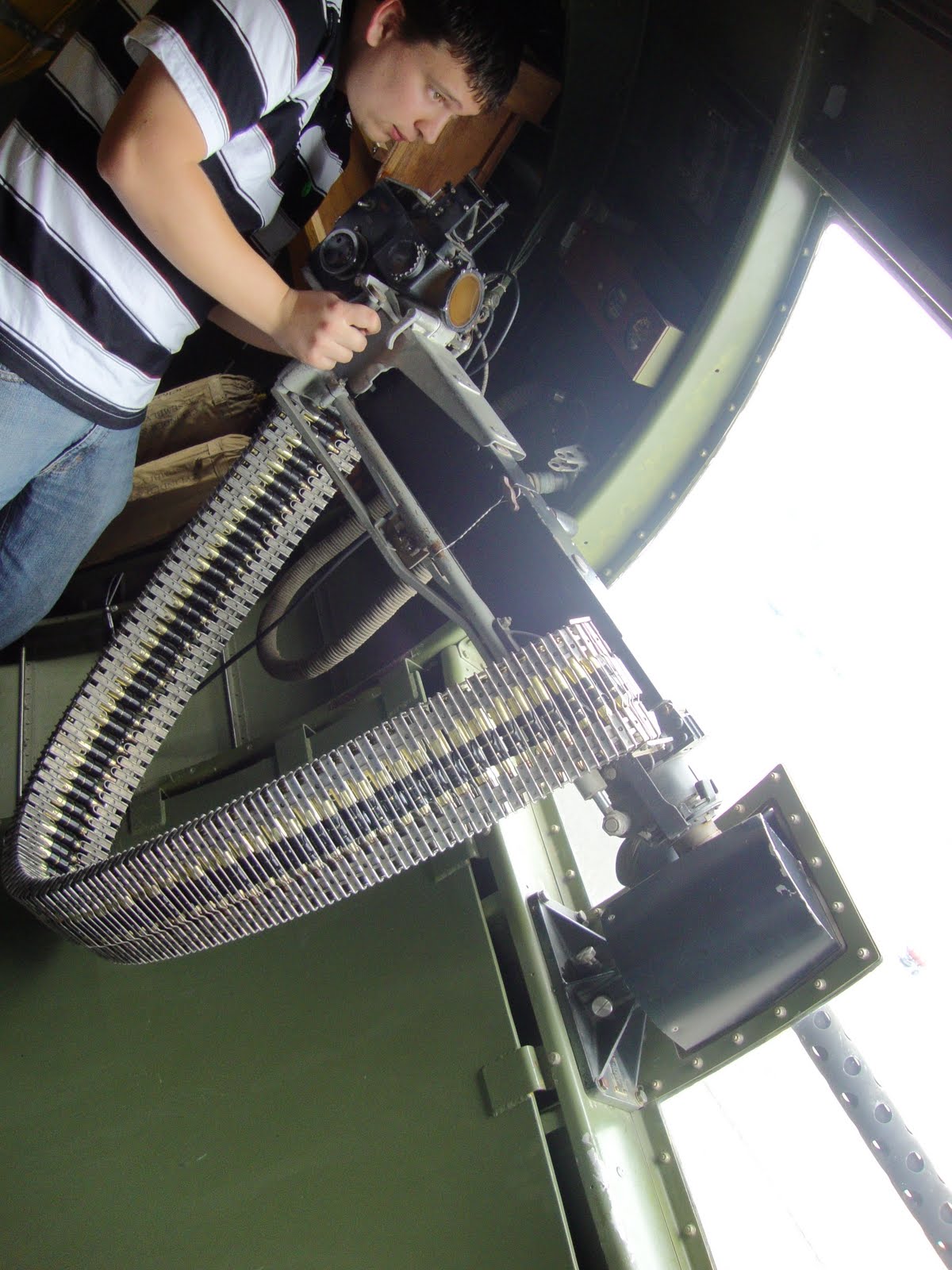
On Friday June 4th Lindsay and I went to an airshow that the Logan-Cache Airport was hosting. The main attraction was the WWII B-17 Bomber. Since Lindsay only had a little over an hour for her work break, we toured the B-17 and didn't look at much else. Would have been fun to fly around town in it, but it was $400 a person for a 25 minute flight. It was fun looking at it, inside and out, and being able to walk across the catwalk in the Bomb Bay. Here are a few pictures of it, and also a video of the flight that took off later that day.


Here are two videos I took from the airshow of it starting and taking off.


Also, a T-28 Trojan flew in that day. The T-28 was mainly a training aircraft used just after WWII. It was built by the same company that made the P-51 Mustang. It saw some action in Vietnam later. More info on it can be seen HERE.

This is the pic I took of it at the airshow.

Later that day, I went back to the airport for some volunteer work. The Civil Air Patrol was presenting the colors and helping with security. I was put in charge of two groups of cadets on ground security. We were responsible for making sure that no one wandered onto the active taxiway.


Overall, it was a fun day with some good historic aircraft.